Normal Delivery vs C-Section: How the Decision Is Really Made (and How to Prepare for a Normal Birth)
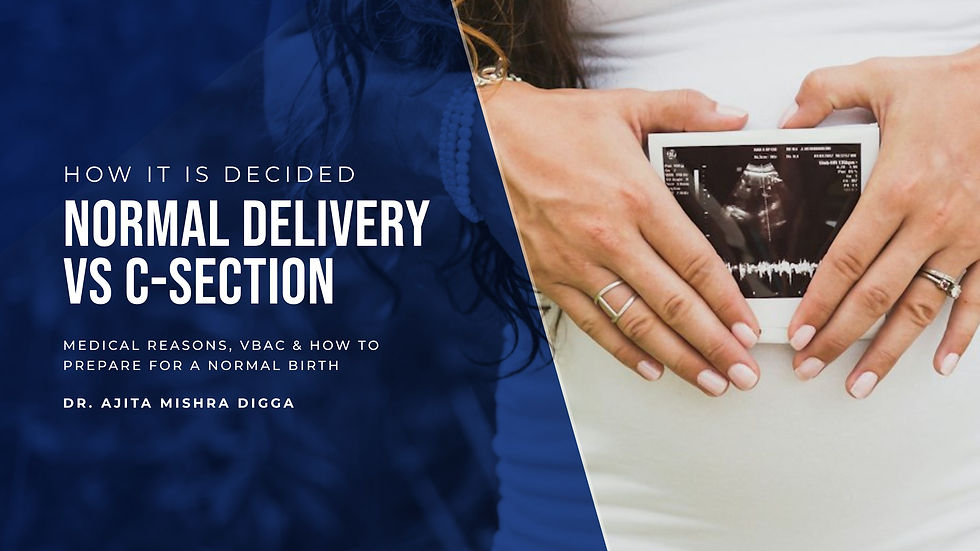
Quick answer: A normal (vaginal) delivery is the safest choice for most healthy pregnancies, with a quicker recovery and fewer risks for future pregnancies. A caesarean section (C-section) is a safe, sometimes life-saving operation that is recommended when there is a clear medical reason, such as the baby lying in the wrong position, a placenta covering the cervix, signs that the baby is in distress, or labour that is not progressing. The right decision is made together with your obstetrician, based on your health, your baby's wellbeing and how labour unfolds, not on the date, convenience or fear.
Almost every expecting mother in Kolkata hears the same question from relatives: "Normal hobe, na operation?" Will it be normal, or an operation?
It's a fair question. West Bengal has one of the highest caesarean rates in the country. According to the National Family Health Survey (NFHS-5), about 83% of births in private hospitals in West Bengal were by C-section, compared with about 23% in public hospitals. Those numbers leave many families wondering whether every C-section is truly needed, and many women anxious that they won't be given a fair chance at a normal delivery.
This guide explains how the decision is actually made, what you can do to improve your chances of a normal birth, and when a C-section is genuinely the safer option.
Normal delivery vs C-section at a glance
Normal (vaginal) delivery | Caesarean section | |
Hospital stay | Usually 1 to 2 days | Usually 3 to 4 days |
Recovery | Most women are up and about within hours; back to light routine in 1 to 2 weeks | Major abdominal surgery; 4 to 6 weeks to recover fully |
Pain afterwards | Perineal soreness for a few days | Wound pain; needs pain relief for several days |
Risks for mother | Tears or stitches; generally fewer complications | Infection, bleeding, blood clots, anaesthesia risks |
Future pregnancies | No added risk from the birth itself | Higher chance of placenta problems and scar-related risks with each C-section |
Baby | Benefits from labour, e.g. clearing fluid from the lungs | Slightly higher chance of breathing difficulty, especially if done before 39 weeks |
Breastfeeding | Usually starts quickly | Can start soon too, with support |
Both are safe when done for the right reasons in a well-equipped hospital. The point is to choose the right one for you, at the right time.
When is a C-section medically recommended?
Some reasons are known in advance (a planned or elective C-section). Others arise during labour (an emergency C-section).
Common reasons for a planned C-section
Placenta praevia: the placenta covers the opening of the cervix
Breech or transverse baby at term, when turning the baby (external cephalic version) is not possible or not successful
Two or more previous C-sections, or certain types of previous uterine surgery
Twins, when the first baby is not head-down
Certain maternal conditions, such as some heart conditions or active genital herpes at the time of labour
Very large baby with other risk factors, such as diabetes, in selected cases
Common reasons for an emergency C-section
Fetal distress: the baby's heart rate shows it is not coping well with labour
Labour not progressing despite good contractions and support
Cord prolapse: the umbilical cord slips down ahead of the baby
Placental abruption: the placenta separates early and causes bleeding
Severe pre-eclampsia where quick delivery is needed
When any of these happen, a C-section is the right and responsible choice. A good obstetrician will explain the reason clearly, even in an emergency.
Reasons that, on their own, are usually not enough
A "good date" or auspicious muhurat
Fear of labour pain, which can be managed with epidural analgesia and good support
The mother being over 30 or a first-time mother
A previous C-section, on its own (see VBAC below)
Cord around the baby's neck seen on a scan, which is common and usually harmless in labour
If you have any of these concerns, talk them through with your doctor. Feeling heard often takes away much of the fear.
Can I have a normal delivery after a previous C-section? (VBAC)
Often, yes. VBAC (vaginal birth after caesarean) is successful for many women who have had one previous C-section with a low transverse scar, especially if the reason for the first C-section isn't present this time and labour starts on its own.
VBAC needs careful counselling and a hospital that can do an emergency C-section quickly, because there is a small risk (well under 1%) of the scar opening during labour. Your obstetrician will look at your previous operation notes, the gap since your last delivery, and this pregnancy's progress before advising you.
How to improve your chances of a normal delivery
You can't control everything, but you can influence a lot.
Choose your obstetrician early and ask about their approach. Ask: "How do you decide when a C-section is needed?" A clear, unhurried answer is a good sign.
Go to every antenatal check-up. Blood pressure, blood sugar, baby's growth and position are monitored so problems are caught early.
Keep weight gain healthy. Excess weight gain and uncontrolled gestational diabetes increase the chance of a C-section.
Stay active. Walking and pregnancy-safe exercise or prenatal yoga, as advised by your doctor, help stamina and labour.
Attend antenatal classes. Knowing what labour feels like, breathing techniques and positions reduces fear and helps you work with your body.
Let labour start on its own when it's safe. Induction is sometimes needed and is safe when indicated, but avoid early induction without a medical reason.
Discuss pain relief in advance. An epidural can make labour far more manageable without increasing the chance of a C-section significantly when used well.
Have a supportive birth partner. Continuous support in labour is linked with better birth experiences.
What recovery looks like after each
After a normal delivery: most women walk within a few hours, go home in a day or two, and gradually return to their routine. Pelvic floor exercises help recovery.
After a C-section: you'll be encouraged to get up and walk within a day to prevent clots. Avoid lifting anything heavier than your baby for about six weeks, and keep the wound clean and dry. Most women feel close to normal by six weeks.
Either way, call your doctor promptly for heavy bleeding, fever, foul-smelling discharge, a red or oozing wound, leg swelling, or severe headache.
Pregnancy care with Dr. Ajita Mishra Digga
Dr. Ajita Mishra Digga is an obstetrician and gynaecologist in Kolkata with more than 10 years of experience, including high-risk pregnancy care. Her approach is simple: support a normal birth whenever it's safe, recommend a C-section when there is a clear medical reason, and explain every decision to you and your family in plain language.
Expecting a baby, or planning one? Call +91 91470 67691 or book an antenatal consultation. Chinar Park, Rajarhat, Kolkata.
Frequently Asked Questions
Is normal delivery better than a C-section?
For most healthy pregnancies, normal delivery is the safer option with quicker recovery and fewer risks in future pregnancies. A C-section is better when there is a clear medical reason, such as placenta praevia, a breech baby or signs that the baby is in distress.
Can I choose a C-section without a medical reason?
You can discuss it, but a caesarean without a medical reason carries more risks than a normal birth for most women. A good obstetrician will understand your concerns, explain the risks and benefits, and help you decide.
Can I have a normal delivery after a C-section?
Many women can. Vaginal birth after caesarean (VBAC) is often possible after one previous C-section with a low transverse scar, with careful monitoring in a hospital that can perform an emergency C-section if needed.
How many C-sections can a woman safely have?
There's no fixed number, but risks such as placenta problems, adhesions and bleeding increase with each repeat C-section. Your obstetrician will advise based on how previous surgeries went.
Does a cord around the baby's neck mean I need a C-section?
Usually not. A cord around the neck is common and most babies are born normally without problems. Monitoring during labour shows whether the baby is coping well.
How long does it take to recover from a C-section?
Most women go home in 3 to 4 days and feel close to normal by about six weeks. Avoid heavy lifting and strenuous exercise until your doctor clears you.
Does an epidural increase the chance of a C-section?
Current evidence suggests an epidural does not significantly increase the chance of a C-section. It may make the pushing stage a little longer, which your team will manage.
What can I do to have a normal delivery?
Attend regular check-ups, keep weight gain and blood sugar in healthy ranges, stay active, attend antenatal classes, and choose an obstetrician who supports normal birth when it's safe.
Comments